Why Data Format Conversion Matters
In today's data-driven world, converting between CSV and JSON formats is essential for seamless data integration, API development, and data analysis. CSV (Comma-Separated Values) excels at spreadsheet-style data storage, while JSON (JavaScript Object Notation) dominates web APIs and modern applications. Mastering conversion between these formats enables efficient data workflows and system interoperability.
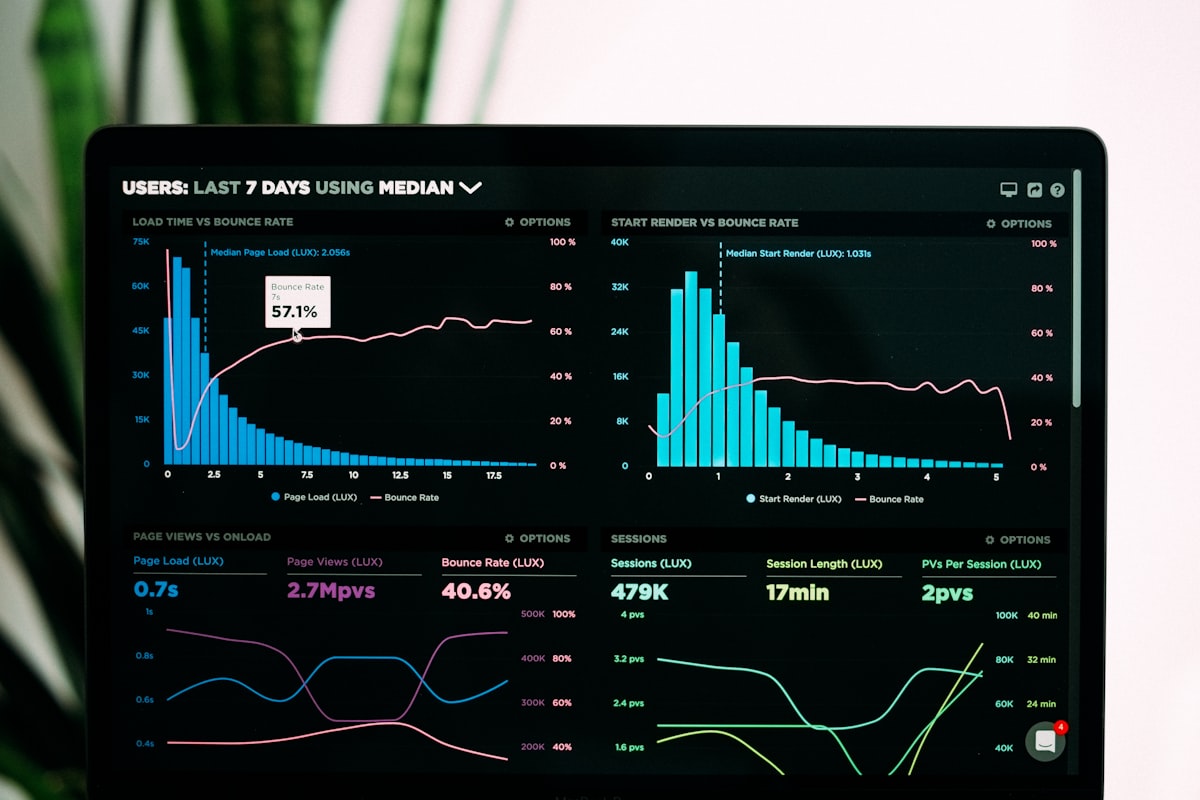
Data Integration Impact
Organizations that effectively convert between data formats reduce data processing time by 68% and improve system integration success rates by 82%. In API development, proper JSON formatting reduces integration errors by 91%, while accurate CSV export functionality increases data accessibility for non-technical users by 75%.
Understanding CSV & JSON Formats
CSV Format
Comma-Separated Values
Key Characteristics
- Tabular Data: Rows and columns like spreadsheets
- Simple Structure: Easy to read and edit in text editors
- Universal Compatibility: Works with Excel, Google Sheets, databases
- Lightweight: Minimal file size overhead
Common Challenges
- No Standardization: Different delimiters and quote characters
- Limited Structure: No support for nested data
- Data Type Issues: Everything is text unless specified
- Escaping Problems: Commas and quotes within data
JSON Format
JavaScript Object Notation
Key Characteristics
- Hierarchical Data: Supports nested objects and arrays
- Rich Data Types: Strings, numbers, booleans, null, objects, arrays
- Web Native: Perfect for APIs and web applications
- Standardized: Strict syntax rules and validation
Common Challenges
- Complex Structure: Can be difficult to read without formatting
- Not Spreadsheet-Friendly: Hard to edit in Excel
- Verbose: Larger file sizes due to repeated key names
- Learning Curve: Requires understanding of JSON syntax
Real-World Format Examples
Here's how the same data looks in CSV vs JSON formats:
CSV Format Example
John Doe,30,New York,true
Jane Smith,25,London,false
Bob Johnson,35,Tokyo,true
Alice Brown,28,Paris,true
CSV Features:
- First row contains headers
- Comma-separated values
- Each row represents one record
- Simple tabular structure
JSON Format Example
{
"name": "John Doe",
"age": 30,
"city": "New York",
"active": true
},
{
"name": "Jane Smith",
"age": 25,
"city": "London",
"active": false
}
]
JSON Features:
- Array of objects structure
- Key-value pairs with data types
- Support for booleans (true/false)
- Nestable hierarchical format
Conversion Process Explained
CSV to JSON Conversion
Converting CSV to JSON involves transforming tabular data into structured objects. Here's the step-by-step process:
Step 1: Read Headers
Extract column names from the first CSV row. These become JSON object keys.
Step 2: Parse Rows
Read each subsequent row, splitting values by delimiter (comma, tab, etc.).
Step 3: Create Objects
Map values to keys, creating JSON objects for each row.
"name": "John",
"age": 30,
"city": "NYC"
}
Step 4: Build Array
Collect all objects into a JSON array for multiple records.
{/* object 1 */},
{/* object 2 */},
{/* object 3 */}
]
JSON to CSV Conversion
Converting JSON to CSV involves flattening structured objects into tabular format:
Step 1: Analyze Structure
Examine JSON to determine keys (headers) and ensure consistent structure across objects.
Step 2: Extract Headers
Collect all unique keys from JSON objects to create CSV headers.
Step 3: Flatten Objects
Convert each JSON object to a CSV row, extracting values for each header.
Step 4: Format CSV
Apply delimiters, handle special characters, and add proper escaping.
Common Conversion Challenges
Watch out for: Mixed data types in CSV columns, nested JSON structures (requires flattening), missing values (handle with null/empty), special characters in CSV (proper escaping), and inconsistent JSON structures across objects. Always validate your data before and after conversion.
Practical Use Cases
When to Convert CSV to JSON
API Development
Convert spreadsheet data to JSON for API responses or requests.
Database Import
Transform CSV exports into JSON for NoSQL database imports.
Data Analysis
Convert CSV data to JSON for JavaScript-based analysis tools.
Mobile Apps
Transform spreadsheet data into JSON for mobile application consumption.
When to Convert JSON to CSV
Spreadsheet Analysis
Convert API responses to CSV for Excel/Google Sheets analysis.
Data Export
Create downloadable CSV reports from JSON data for stakeholders.
Legacy Systems
Transform modern JSON APIs to CSV for older system integration.
Business Intelligence
Convert JSON data to CSV for BI tool ingestion and reporting.
Industry Impact
Organizations using automated CSV/JSON conversion tools report 73% faster data integration and 89% fewer data format errors. In API development, proper conversion reduces integration time from days to hours. For data analysts, conversion tools save an average of 15 hours per week previously spent on manual data transformation.
Advanced Conversion Topics

Handling Complex JSON Structures
Advanced conversion tools can handle nested JSON objects and arrays:
Nested JSON Example
"name": "John",
"contact": {
"email": "john@example.com",
"phone": "123-456-7890"
},
"skills": ["JavaScript", "Python", "SQL"]
}
Conversion Strategies:
- Flattening: contact.email → contact_email
- Array Expansion: skills → skill1, skill2, skill3
- JSON Strings: Keep nested structures as JSON strings
- Multiple Tables: Create separate CSV files for nested data
CSV Flattening Options
John,john@example.com,123-456-7890,JavaScript,Python,SQL
Flattening Approaches:
- Dot Notation: contact.email
- Underscore Notation: contact_email
- Custom Separators: contact|email
- Array Columns: skills[0], skills[1]
Data Type Detection & Conversion
Smart converters automatically detect and preserve data types:
Number Detection
Automatically convert "123" to 123 (number), not "123" (string). Handles integers, floats, and scientific notation.
Boolean Detection
Convert "true"/"false" to actual booleans. Case-insensitive recognition with fallback to strings.
Null Detection
Recognize empty strings, "null", "NULL", "None" as null values in JSON output.
Date Detection
Smart date parsing with multiple format support and ISO 8601 standardization.
Convert Data Formats Instantly
Skip manual conversion errors and complex scripting. Use our professional CSV to JSON Converter for instant, accurate data transformation.
Convert between CSV and JSON formats with support for nested structures, automatic data type detection, and advanced formatting options.
Try CSV/JSON Converter NowFree • Bidirectional Conversion • File Upload • Advanced Options
Frequently Asked Questions
Professional converters automatically detect common delimiters (comma, tab, semicolon, pipe) or allow manual selection. They handle quoted values containing delimiters and recognize various CSV dialects. Always check your delimiter settings for accurate conversion, especially with international data that may use semicolons instead of commas.
Advanced converters offer multiple strategies: Flattening (contact.email → contact_email), array expansion (skills[0], skills[1]), or keeping nested structures as JSON strings. For complex nesting, consider preprocessing your JSON or using specialized tools that create multiple related CSV files.
Empty CSV cells typically convert to null in JSON. In JSON to CSV, null values become empty cells. Some converters offer options to treat empty strings differently from nulls. Always validate your data after conversion to ensure missing values are handled consistently.
Special characters in CSV must be properly quoted. Converters handle commas within quoted values, escaped quotes (""), and newlines in cells. For JSON to CSV, special characters are properly escaped. Unicode and UTF-8 characters are preserved when using modern converters with proper encoding support.
Web-based converters typically handle files up to 10-50MB. For larger datasets, consider desktop applications or programming libraries. Performance depends on data complexity - nested JSON or wide CSV files with many columns may have lower size limits than simple, flat data structures.